Will AI Replace Teachers? Exploring the Future of Education
Neural networks have moved far beyond novelty and entertainment. They are now being adopted across a wide range of professions, changing the way people work and the tools they rely on.
According to a Beautiful.ai survey of 3,000 managers, 41% believed that lower-cost AI tools could eventually replace some employees.
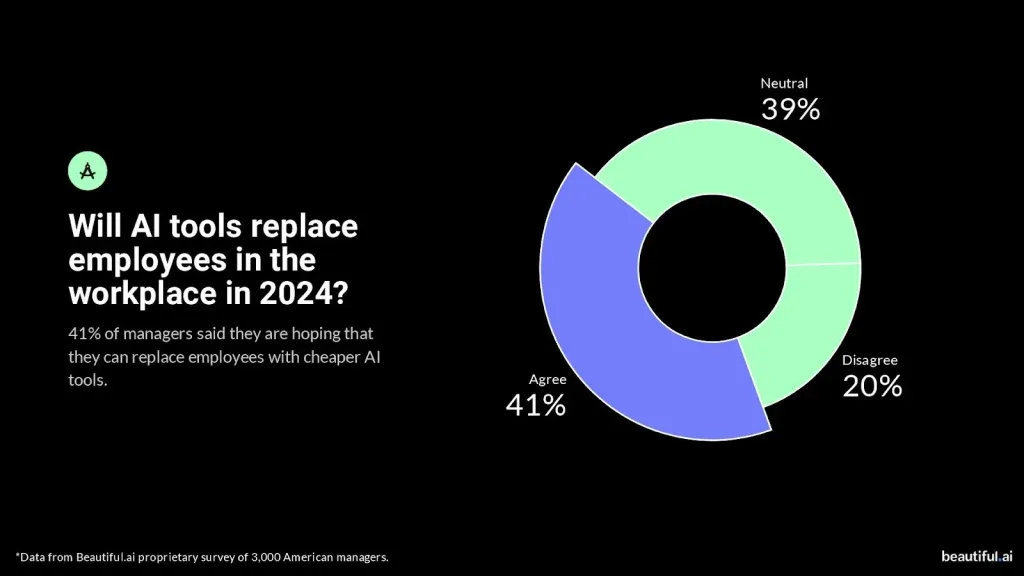
But what does this mean for education? AI-powered chatbots have made the discussion even more relevant. ChatGPT, developed by OpenAI, is one of the best-known examples, alongside many other tools used by students, teachers and education platforms.
In this article, we look at how AI can support education, where its limitations still matter and whether technology could ever replace the role of the teacher.
Contents:
1. What are the benefits of AI in education?
2. What are the limitations of AI in education?
3. Could AI replace teachers?
What are the benefits of AI in education?
Personalised learning
AI-powered systems can analyse how students learn and use that information to adapt content, pace and tasks to individual needs. This can make learning feel more responsive and allow students to receive support that is better suited to their level and progress.
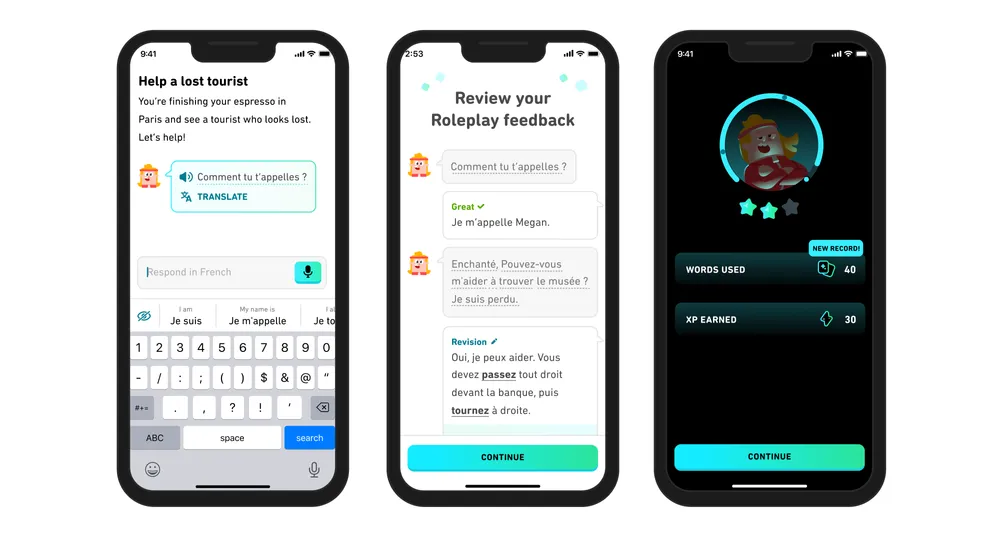
One example is Duolingo, which uses personalised learning features to create tailored language practice and conversations.
AI as a virtual tutor
AI can help students work through a difficult maths problem, understand a scientific concept or translate a text into another language. It can also provide additional explanations outside the classroom, summarise material or help students explore a topic in more depth.
Used carefully, these tools can give students another source of support and make independent learning more accessible.
For example, Khan Academy developed Khanmigo, an AI-powered tool designed to support students as a tutor and teachers as an assistant.
Assessment and lesson planning
Language models such as ChatGPT can help generate test questions, quizzes, exercises, lesson ideas and course outlines. They can also support teachers when reviewing student work or identifying areas that may need further attention.
For experienced teachers, AI can reduce the amount of repetitive preparation involved in creating materials, although the results still need professional judgement, editing and adaptation.
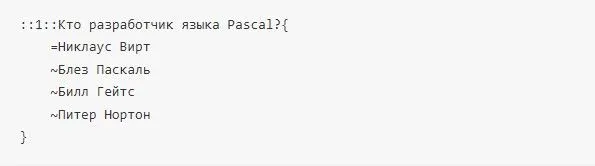
Example: a programming quiz for Moodle generated with the help of ChatGPT.
AI can therefore support both teachers and students: it can save teachers time and give students faster access to explanations and additional learning support. But reducing workload is very different from replacing the teacher altogether.
Two of the biggest limitations are the reliability of AI-generated information and the absence of genuine human interaction.
What are the limitations of AI in education?
Reliability of information
AI systems can produce answers that sound convincing while still being inaccurate. They may generate incorrect facts, invent references or provide information without enough context.

This is one of the main reasons AI output should not be treated as automatically correct, especially in education, where students may not yet have enough subject knowledge to recognise an error.
Research has also shown that users can sometimes place too much trust in AI-generated answers because they are written in a confident, clear and well-structured style.
AI is therefore most useful as a supporting tool rather than an unquestioned source of knowledge. Teachers still play an essential role in checking information, providing context and helping students develop critical thinking.
Lack of context and personal experience
Unlike a teacher, an AI system does not have personal experience or an individual perspective. It generates responses based on patterns in large amounts of existing data.
This means AI-generated writing can sometimes feel generic, formulaic or disconnected from the specific context of the learner. Longer responses may also lose coherence or contain contradictions.
Human editing remains important when AI is used to produce educational content, particularly when the goal is to help students learn how to think, write and express ideas independently.
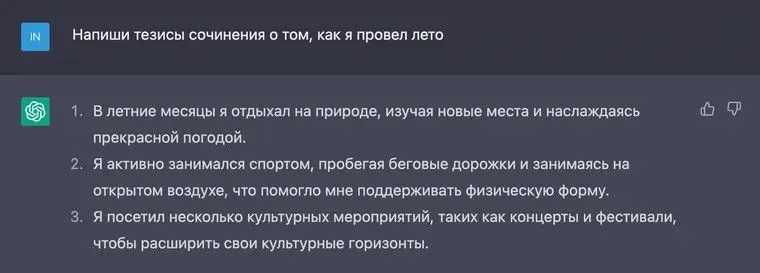
Example: an AI-generated essay on “How I spent my summer”.
The importance of human interaction
Teaching is about much more than delivering information. Teachers respond to students’ motivation, confidence, emotional state and individual needs. They build relationships, create a safe classroom environment and help students navigate situations that cannot be reduced to a set of predefined instructions.
Teachers also provide judgement, encouragement and perspective. They understand the wider context around a student and can adapt their approach based on what is happening in the classroom.
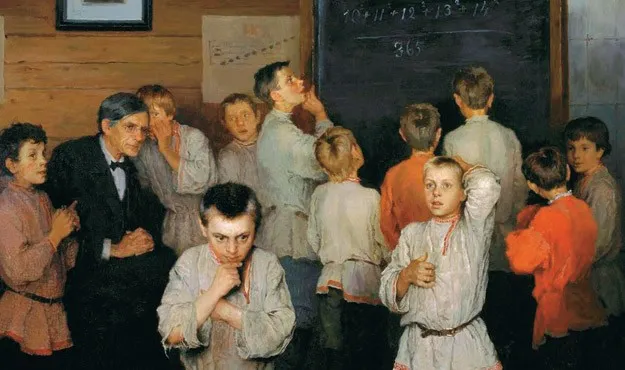
Nikolay Bogdanov-Belsky’s painting Mental Arithmetic in the Public School of S. A. Rachinsky is a reminder that education is also built around the relationship between teacher and student. Sergei Rachinsky, the teacher shown in the painting, developed his own methods of teaching mental arithmetic and had a lasting influence on his pupils.
So, will AI replace teachers?
Probably not. AI is better understood as a tool that can support teachers rather than replace them.
Used well, it can reduce administrative work, help with lesson preparation and give students additional ways to practise and understand difficult material. Used without enough oversight, however, it can introduce errors, weaken critical thinking and create overreliance on automated answers.
The role of the teacher is therefore likely to change rather than disappear. As technology develops, schools will need educators who can judge when AI is useful, adapt it to the needs of their students and combine digital tools with professional experience.
The future of education may lie not in choosing between people and technology, but in finding the right balance between human expertise and intelligent tools.