Academic Reporting: From Traditional Practice to Modern Tools

Academic reporting is not yet a standard part of every school’s practice, but it is becoming an increasingly important part of a strong educational experience. Traditionally, an academic report is a detailed summary produced at the end of a term or reporting period. It gives families a broader picture of how a student is progressing, including the subjects they are doing well in, areas that may need more attention, their approach to learning and, in some cases, their engagement with teachers and classmates.
Reports can take many different forms. Some schools prefer a simple, formal format that focuses only on essential information. Others create more detailed reports with school branding, visual elements and a wider range of academic and pastoral information.
A typical report may begin with the student’s name and an introduction from a senior member of staff, followed by subject results, teacher comments and other relevant information.
Reports can also include information about soft skills such as communication, leadership and teamwork, as well as attendance, absences, House Points and other areas of school life. Depending on the school’s assessment system, grades may be presented in different formats and supported by charts or other visual summaries.
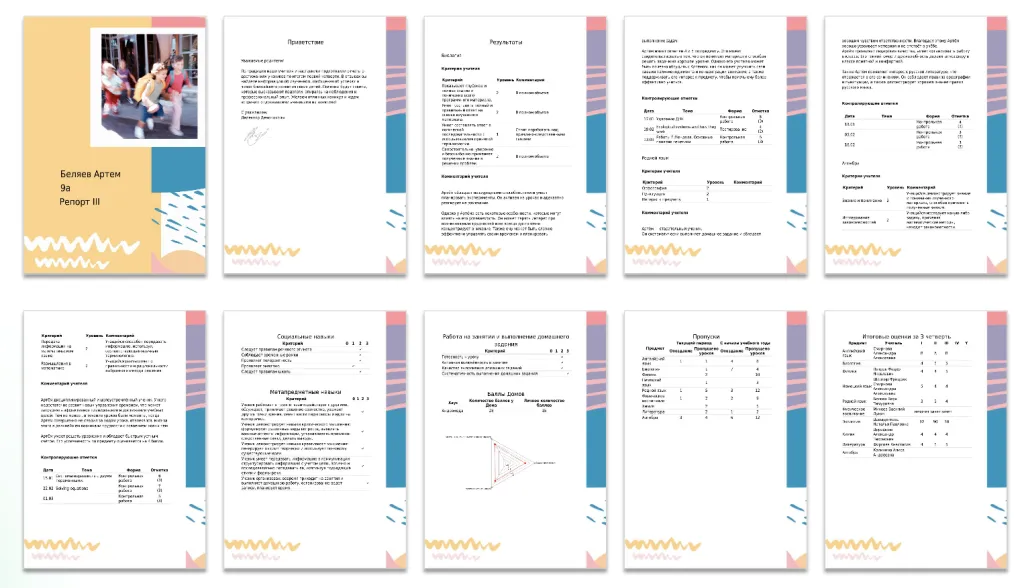
Why are schools investing more time and effort in academic reports? Because effective reporting helps students, parents and teachers understand progress more clearly and make better decisions about what should happen next.
The main purpose of academic reporting is to provide meaningful feedback. Teacher comments help students and families understand strengths, areas for improvement and progress within individual subjects or activities. Reports can capture both current attainment and development over time, making it easier to identify where additional attention or support may be needed.
For parents, this creates a clearer picture of their child’s education. Rather than seeing only final grades, they can understand how their child is progressing throughout the year and where they may need additional support.
Academic reporting is therefore much more than an administrative requirement. Used well, it can support several important goals:
- Recording progress throughout the year
- Showing development over time
- Providing meaningful feedback
- Planning the next steps in learning
- Giving families greater visibility into a student’s education
Not long ago, producing academic reports could be a lengthy manual process. Teachers had to complete forms, calculate results and write comments separately for every student. Modern school management systems such as Mojo can significantly reduce this workload.
Information already recorded elsewhere in the system can be added to reports automatically, reducing duplicate work and the risk of errors. Schools can also create templates that give every report a consistent structure and appearance. Once published, reports can be made available digitally to students and parents without the need to print and distribute paper copies.
Mojo is designed to make academic reporting easier to organise and manage.
Schools begin by creating report templates with the structure and visual style they want to use. Once the template is ready, relevant information from academic records and other areas of Mojo can be added automatically.
What does this mean for teachers?
Automation reduces the amount of routine work involved in preparing reports, giving teachers more time to focus on meaningful feedback. Instead of repeatedly entering information that already exists elsewhere in the system, teachers can concentrate on comments, professional judgement and the individual progress of each student.
What does this mean for students and parents?
Students receive a clearer picture of their progress. Charts, grades and teacher feedback can make it easier to recognise strengths, understand areas for development and see how performance changes over time.
Parents also gain a more detailed understanding of how their child is doing at school. Reports can be accessed online, allowing families to review progress, recognise achievements and respond earlier when additional support may be needed.
With the right structure and tools, academic reporting becomes easier to manage while providing useful information for everyone involved in a student’s education.
How should a school introduce academic reporting?
The first step is to decide what the report is intended to achieve. The purpose of the report will determine its content, structure and the people involved in creating it.
Schools may find it useful to begin with a few questions:
- What information should parents receive? Should the report focus only on academic performance, or should it also include skills, wellbeing and other areas of development?
- Who should contribute to the report? Will it be completed only by subject teachers, or should pastoral staff, psychologists or other specialists also provide comments?
- How much time should staff have to complete reports, and when should families receive them?
- Should parents be able to respond to the report and provide feedback of their own?
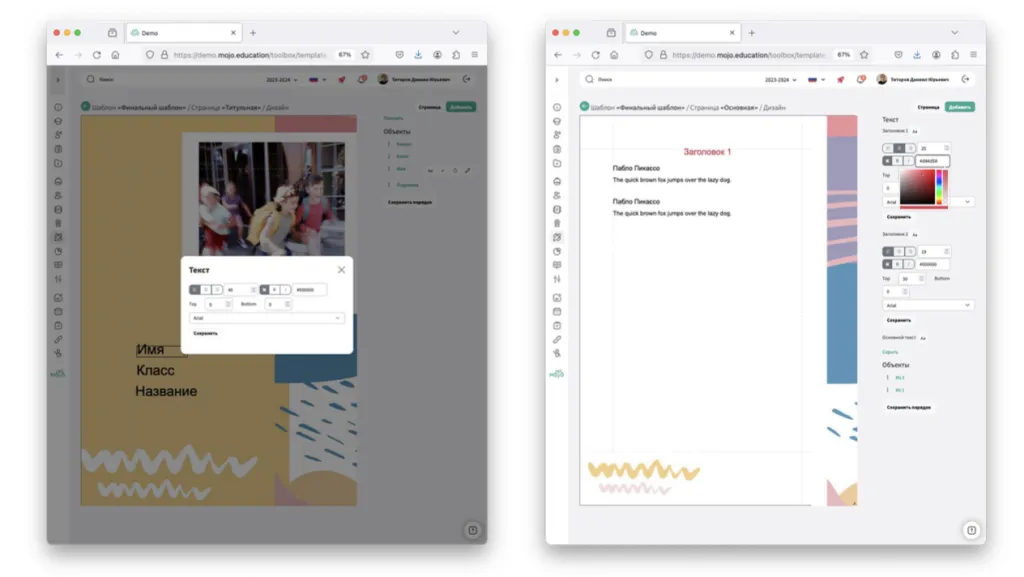
Once these decisions have been made, the school can create its report template. This may include branding, graphical elements and a defined layout for each section.
Creating the template may require some initial work, but it only needs to be set up once. Future reports can then follow the same structure, giving the school a consistent reporting format from one term or academic year to the next.
The next step is to decide which sections the report should contain. Mojo supports different types of content blocks that schools can combine depending on the information they want to include.
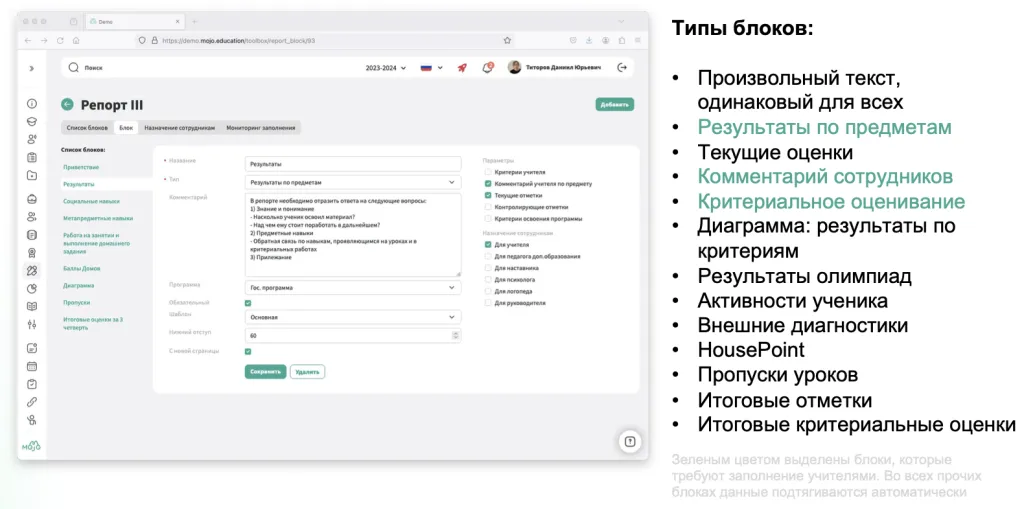
For example, a general text section can be used for information that applies to every student. A senior leader might use this space to explain the school’s priorities for the term, describe the assessment approach or introduce the main focus of the reporting period.
Subject results allow teachers to provide individual feedback and assessment against criteria relevant to their subject.
Comments from form tutors, pastoral staff or other specialists can provide a broader view of the student beyond individual subjects.
Some sections require input from teachers, while others can be completed automatically using information already recorded in Mojo during the academic period.
For example, if the school uses House Points, those results can be included automatically.
An end-of-year report might also include final grades from different reporting periods, attendance information and other relevant academic data.
Each section can be configured according to its purpose: what information should appear, who should complete it and who should be able to see it.
Below is an example of a report structure that a school could use when introducing academic reporting for the first time.
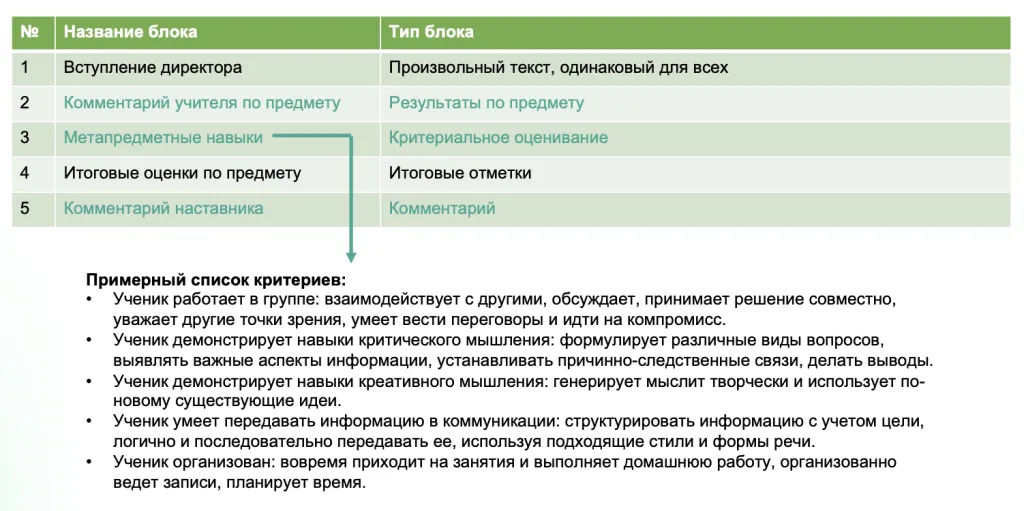
Schools may also choose to create assessment criteria for teachers to use when completing reports. Teachers select the appropriate level for each criterion, and results from several members of staff can be combined to provide a broader view of the student’s development.
This information can also be presented visually, for example through a radar chart.
A report for parents might include:
- A general introduction covering key priorities, achievements or goals for the reporting period.
- Subject teacher comments, including feedback on academic knowledge, skills and progress.
- An assessment of soft skills and other areas of personal development.
- Final subject grades, added automatically from academic records.
- A concluding comment from the form tutor or mentor summarising the student’s progress over the reporting period.
The next step is preparing teachers.
Staff need to understand both the purpose of the reports and how they should be completed. This usually involves two areas of preparation.
- Guidance on report writing. Schools may run meetings or departmental sessions to establish a consistent approach to feedback. Staff can review examples, discuss what makes a useful report and agree on the tone and level of detail expected.
- Technical training. Teachers also need to understand how reports are completed in the system, how different sections work, how progress can be saved and how reports can be returned to later before publication.
Once teachers have completed their reports, they can be reviewed by a senior member of staff before publication. Mojo provides a preview of completed reports so that errors can be corrected and information checked before families receive them.
Reports can then be published directly to parent accounts without the need to generate, download, print and distribute them manually.
The reporting process can therefore be divided into two main stages.
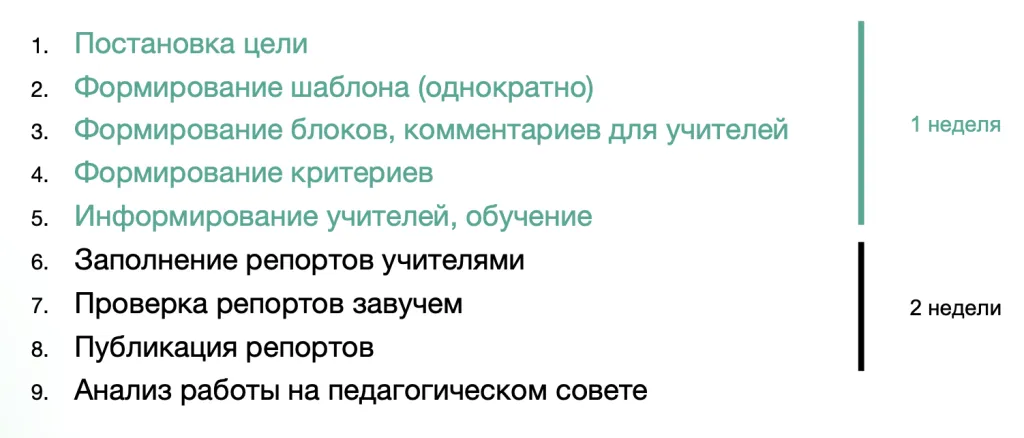
1. Preparation
- Report templates are created at the beginning of the academic year.
- The school defines the criteria, indicators and information that should appear in each report.
- Templates are designed around the school’s curriculum and reporting goals.
- Teachers are given access to the relevant templates.
- Staff receive the guidance and training they need before completing reports.
2. Report completion and review
- Teachers are given a defined period in which to complete their reports without disrupting normal teaching.
- They add comments, assessments and other information about each student’s progress.
- The system can help identify missing information or inconsistencies before reports are published.
- Reports are then reviewed for accuracy, clarity and any remaining errors.
Mojo simplifies both the preparation and distribution of academic reports. Writing tools support teachers during editing, while completed reports can be reviewed, approved and published directly to parents’ accounts.
Previous reports also remain available for future reference, giving teachers a useful record of each student’s progress over time and providing continuity when teaching staff change.