From Grades to Growth: The Future of School Reporting
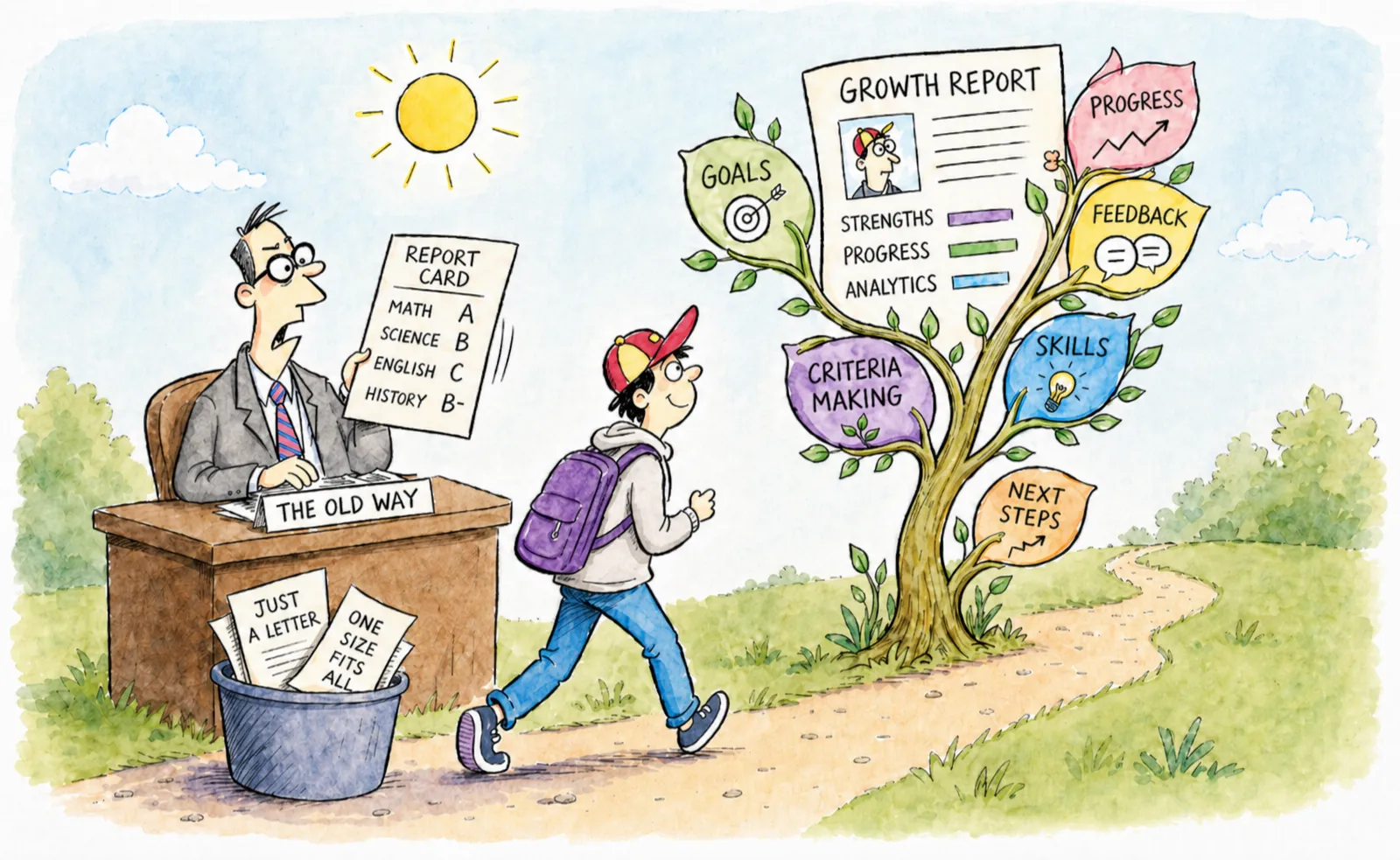
From Grades to Growth: What Will the School Report of the Future Look Like?
Traditional school reports remain an important part of education, but a final grade alone no longer tells the whole story. A modern report should help students, parents and teachers understand not only the outcome, but the learning journey behind it — progress, strengths, areas for development and the next steps.
With Mojo, this process becomes clearer and easier to manage.
A brief history of school reports
History tells us that Aristotle taught Alexander the Great. But did he ever write him a school report? Did it say that Alexander was ambitious, restless and often distracted by thoughts of future empires? Probably not. Still, the idea reminds us of something important: teachers have always noticed far more about students than their academic knowledge alone. They see effort, character, attitude to learning and potential.
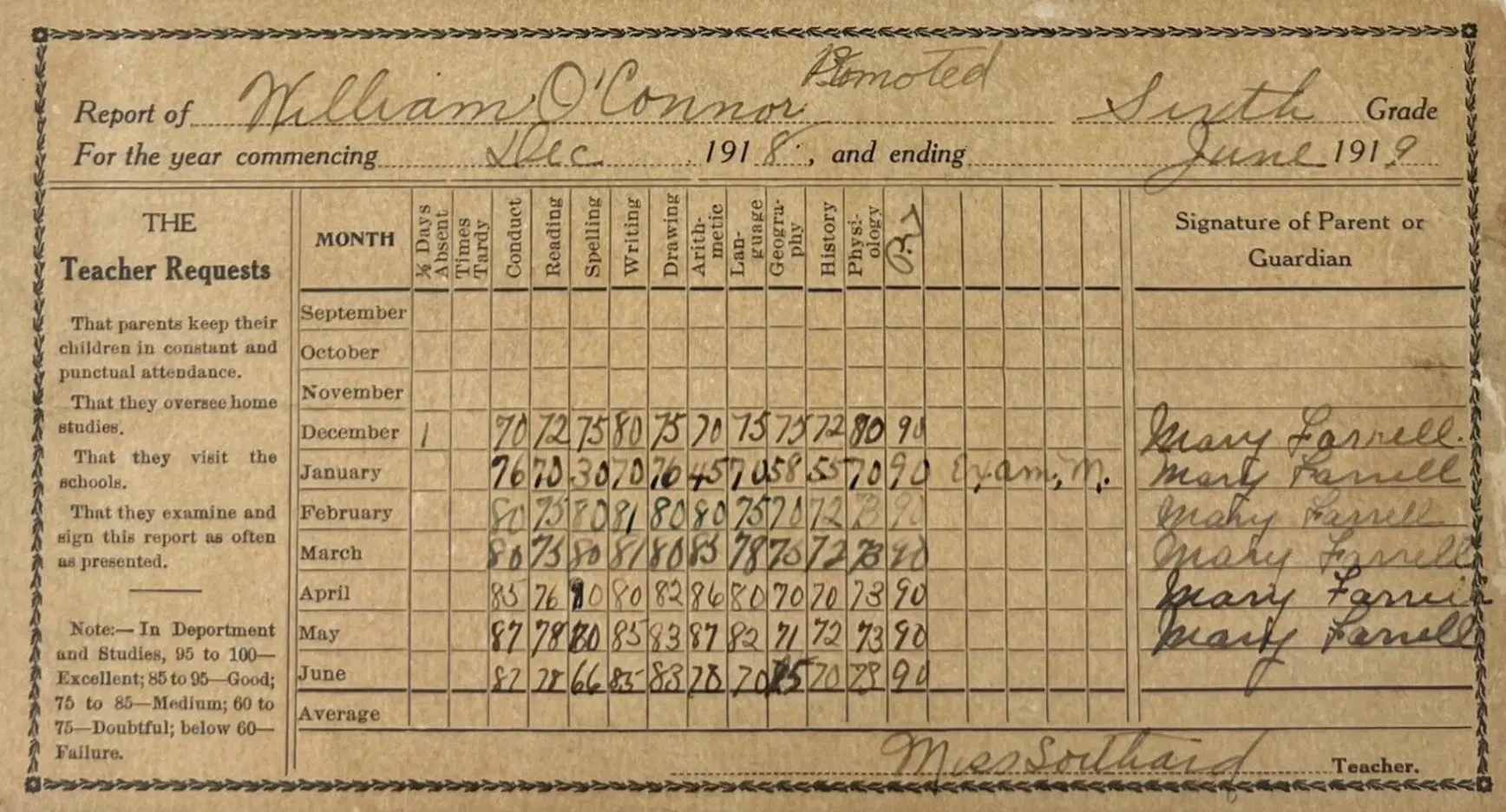
School reports have existed for much longer than we might think. By the nineteenth century, they could already include examination results, teacher comments and observations about a student’s character. At King’s School, Canterbury, examination results appeared in Speech Day programmes as early as the 1840s, while at Eton, form tutors would write to parents at the end of each term.
These reports were not always perfect. Some comments were witty, others rather blunt, and a few would probably feel inappropriate by today’s standards. But they had one important quality: they felt personal.
Why traditional reporting is no longer enough
School reports today are far more structured than they once were. They usually include marks, attendance, teacher comments and, in some schools, information about behaviour. But structure alone does not necessarily make a report useful.
As education expanded and teachers became responsible for larger numbers of students, writing detailed, genuinely individual reports for every child became increasingly difficult.
As a result, reporting often relies on familiar phrases such as “well done”, “needs to focus more” or “good work”. These comments are not necessarily wrong, but without context they rarely explain what sits behind the judgement.
For example, “needs to focus more” could mean very different things. A student may lack confidence, struggle to organise their work, have gaps in their knowledge, feel less motivated or find it difficult to concentrate in class. Without more precise feedback, the student may not know what to improve, parents may struggle to understand how to help, and the school may miss wider patterns.
Traditional reports also tend to focus on a snapshot of achievement — what a student has reached at a particular point in time. A final grade records the outcome, but rarely explains how the student arrived there or what support would be most useful next.
This is why school reporting needs a different approach: one that is clearer, more specific and more focused on student development.
The role of criteria-based assessment
One way to make reports more meaningful is through criteria-based assessment. Instead of presenting a single overall grade, this approach breaks learning down into specific areas, making feedback more informative and transparent.
For example, instead of simply reporting:
English: 78%
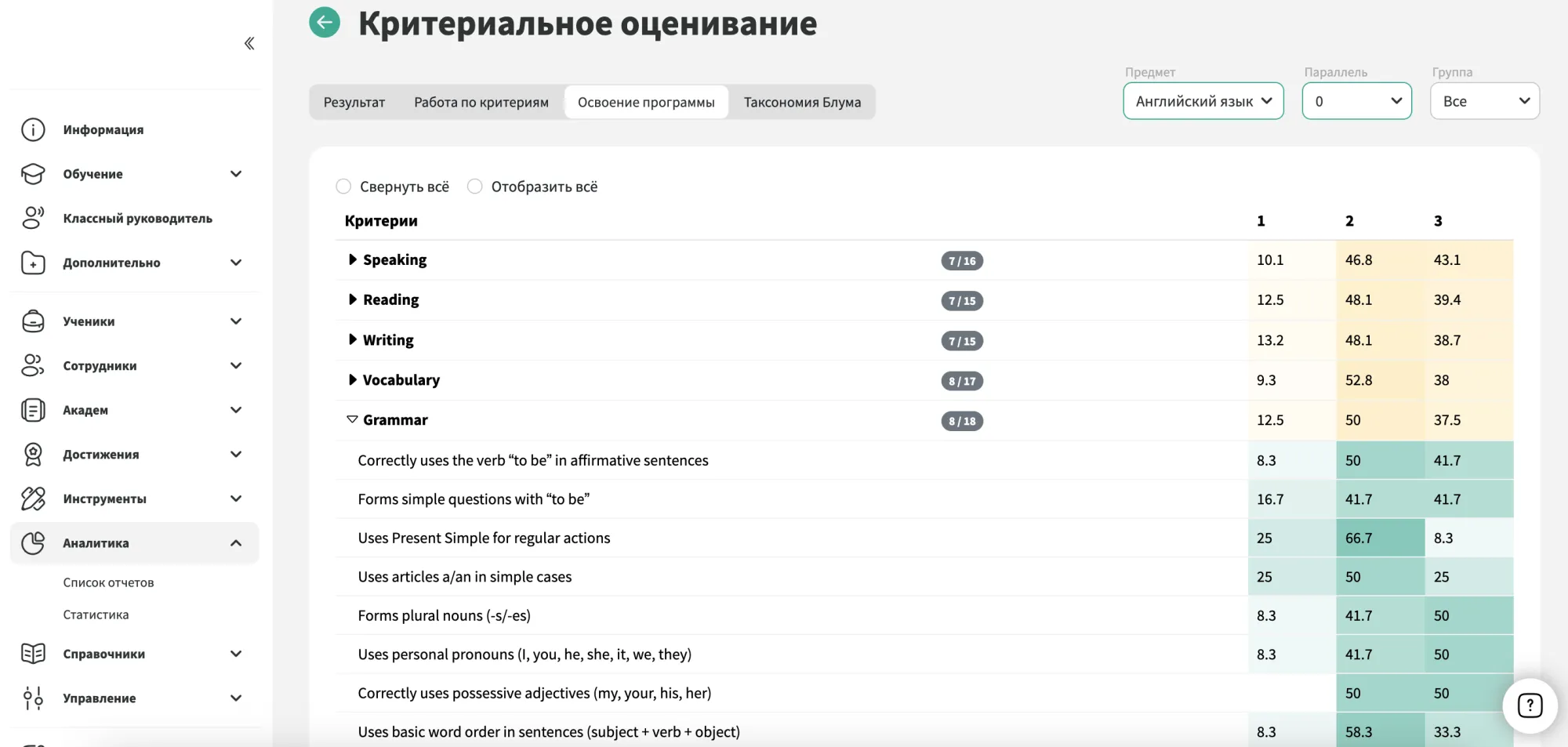
a report can show what that result is made up of: reading comprehension, writing, speaking, grammar, vocabulary or participation in discussion.
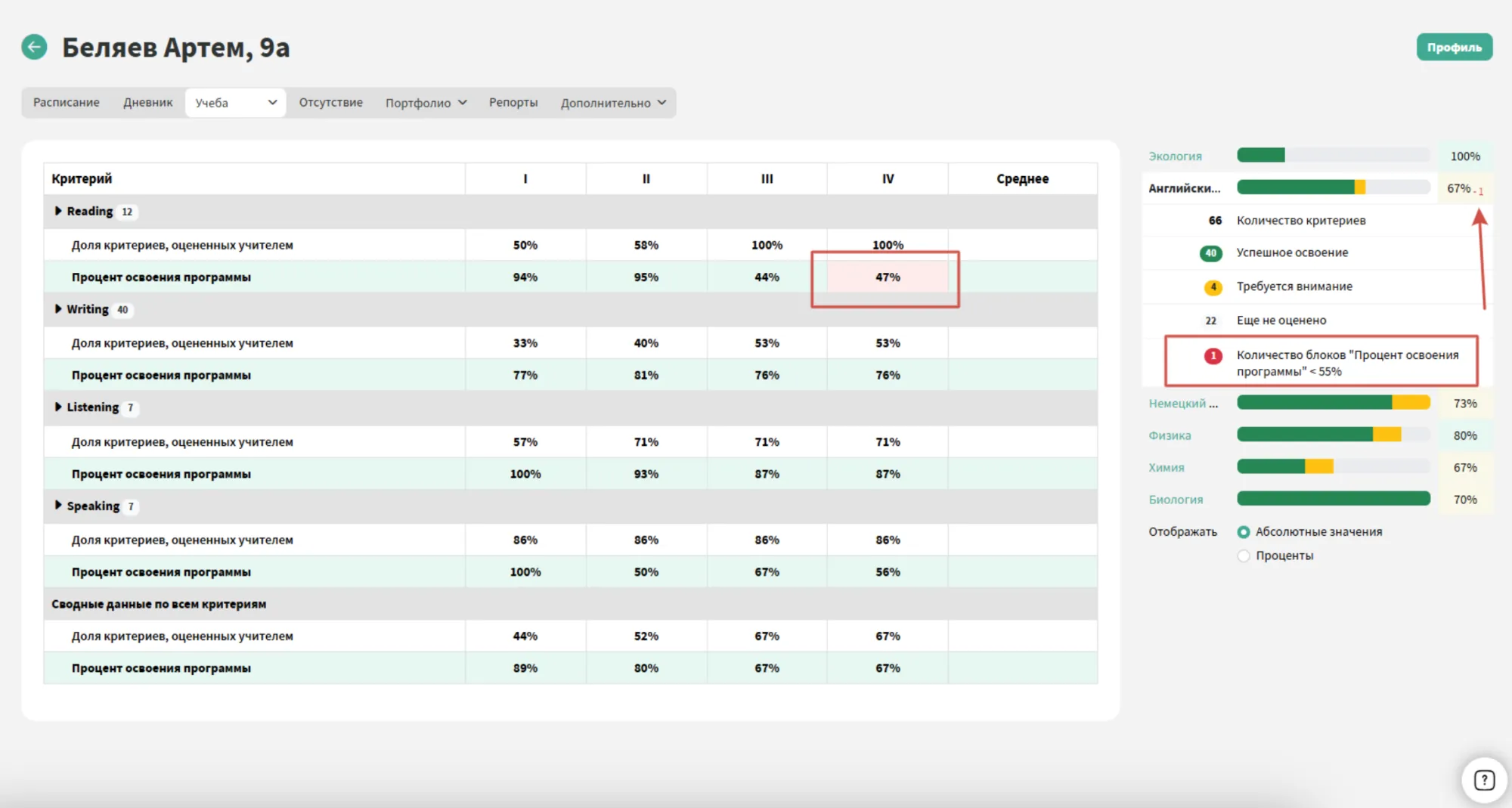
This provides much more context. It becomes easier to see where a student is confident and where additional support may be needed.
Criteria-based assessment can also make feedback more consistent across classes and year groups. Teachers are working from clear criteria and specific observations rather than relying only on a general impression.
Soft skills should be part of reporting too
A school report should reflect more than academic results. Soft skills such as communication, teamwork, leadership, responsibility and problem-solving all influence how students learn and work with others.
A student may achieve excellent grades but struggle to collaborate in a group. Another may not always produce the strongest academic results but show leadership, empathy or an ability to support others. If reporting focuses only on test scores, these qualities can easily go unnoticed.
Soft skills can also be assessed using clear criteria. Schools might look at how a student contributes to group work, communicates ideas, takes responsibility, listens to others, suggests solutions or follows a task through to completion.
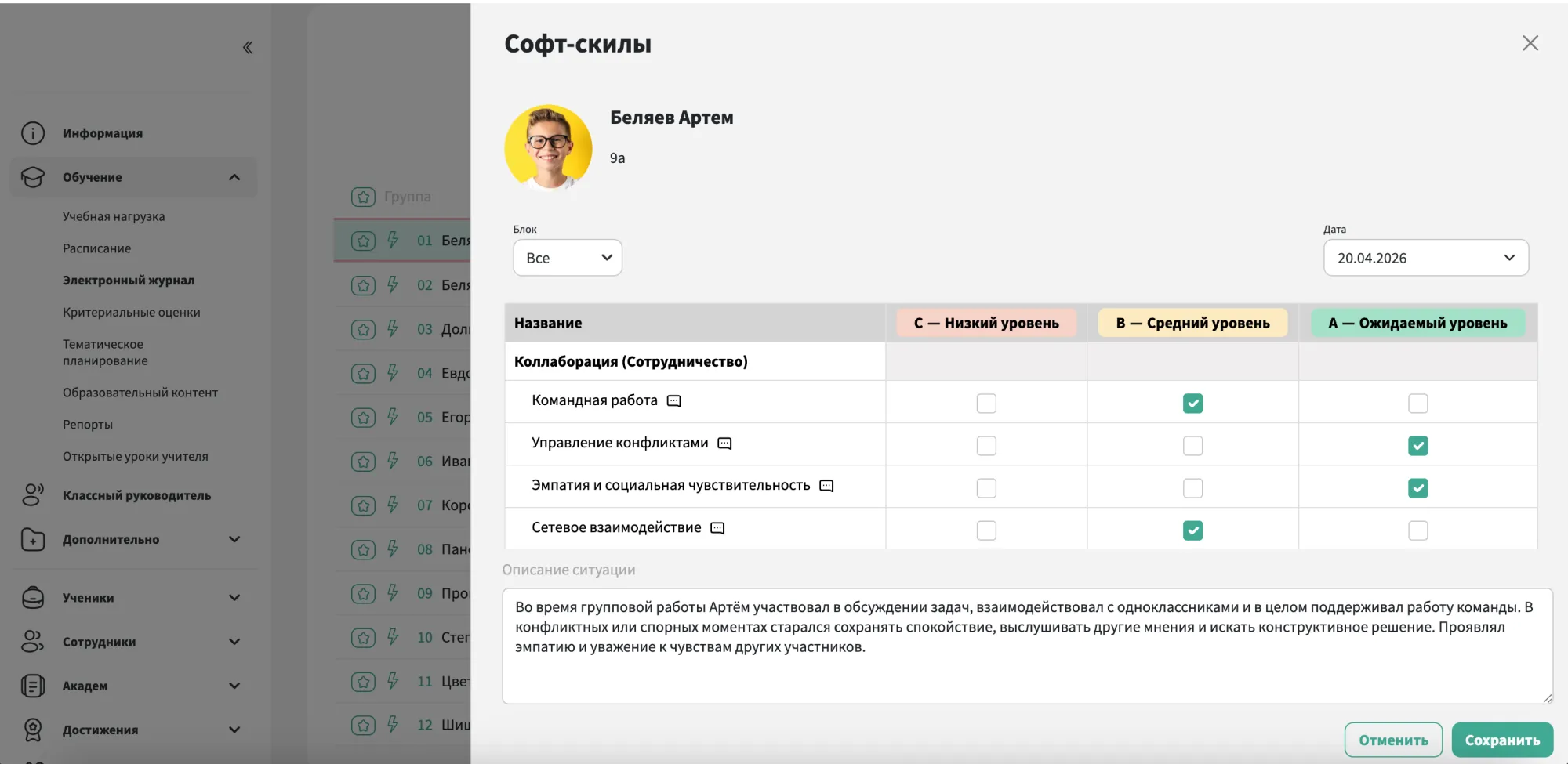
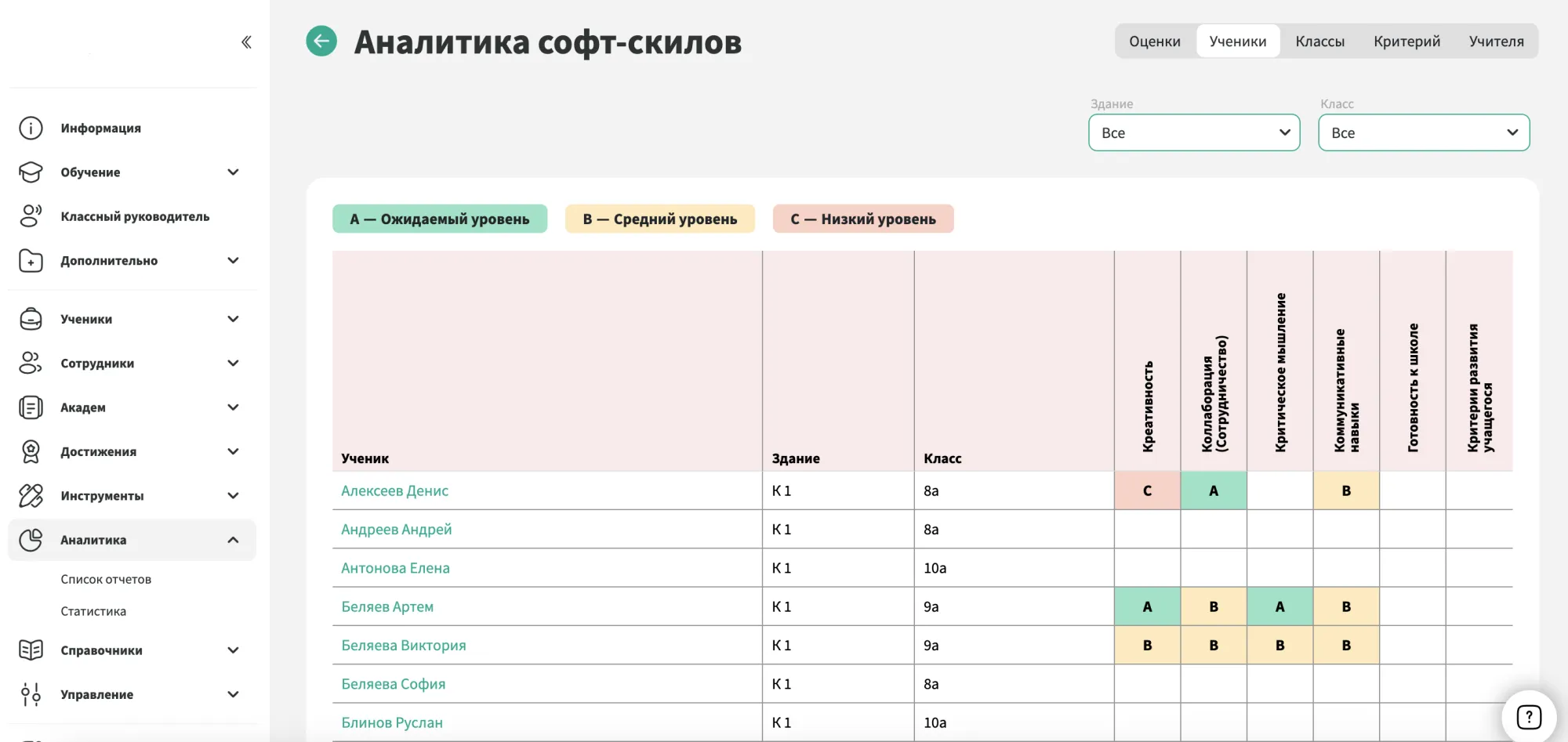
This does not make reporting vague or overly subjective. On the contrary, structured observations can give a fuller picture of the student — not only through marks, but through how they are developing as a learner and as a person.
From static reports to continuous reporting
Another important shift is towards continuous reporting. Traditionally, a school report is produced at the end of a term, semester or academic year. By the time parents receive it, some of the information may already be out of date. The student may have improved, the class may have moved on to a new topic, or the teacher may already be working towards different goals.
Continuous reporting works differently. It allows teachers to record meaningful observations and updates throughout the learning process rather than waiting until the end.
This can include teacher comments, examples of work, project results, criteria-based assessments, short progress notes, images, videos or other evidence. Feedback becomes more timely, allowing students to act on it while the learning is still taking place rather than receiving it after the period has already ended.
Mojo: a new approach to school reporting
Adding more meaningful information to school reports does not have to mean creating more work for teachers. With the right system, reporting can save time while giving schools a much richer picture of student development.
This is where Mojo can help. Instead of building a report only at the end of a reporting period, schools can gradually develop a more complete picture of each student over time. Academic progress, soft skills, criteria-based assessment and teacher observations can all be recorded as part of everyday learning.
Because this information is already stored within the system, teachers do not need to search across separate documents, notes or spreadsheets. Data recorded through assessment and learning activities can be organised and incorporated into reports using Mojo’s built-in report builder.
The result is a report that is more structured and easier to prepare while still retaining individual detail and context.
Mojo also gives schools access to useful analytics. When information is collected consistently, schools can review individual progress, class performance, soft-skill development, criteria-based results and wider academic trends.
This can be particularly valuable for school leaders, who gain a clearer view of what is happening across different classes, year groups and subject areas.
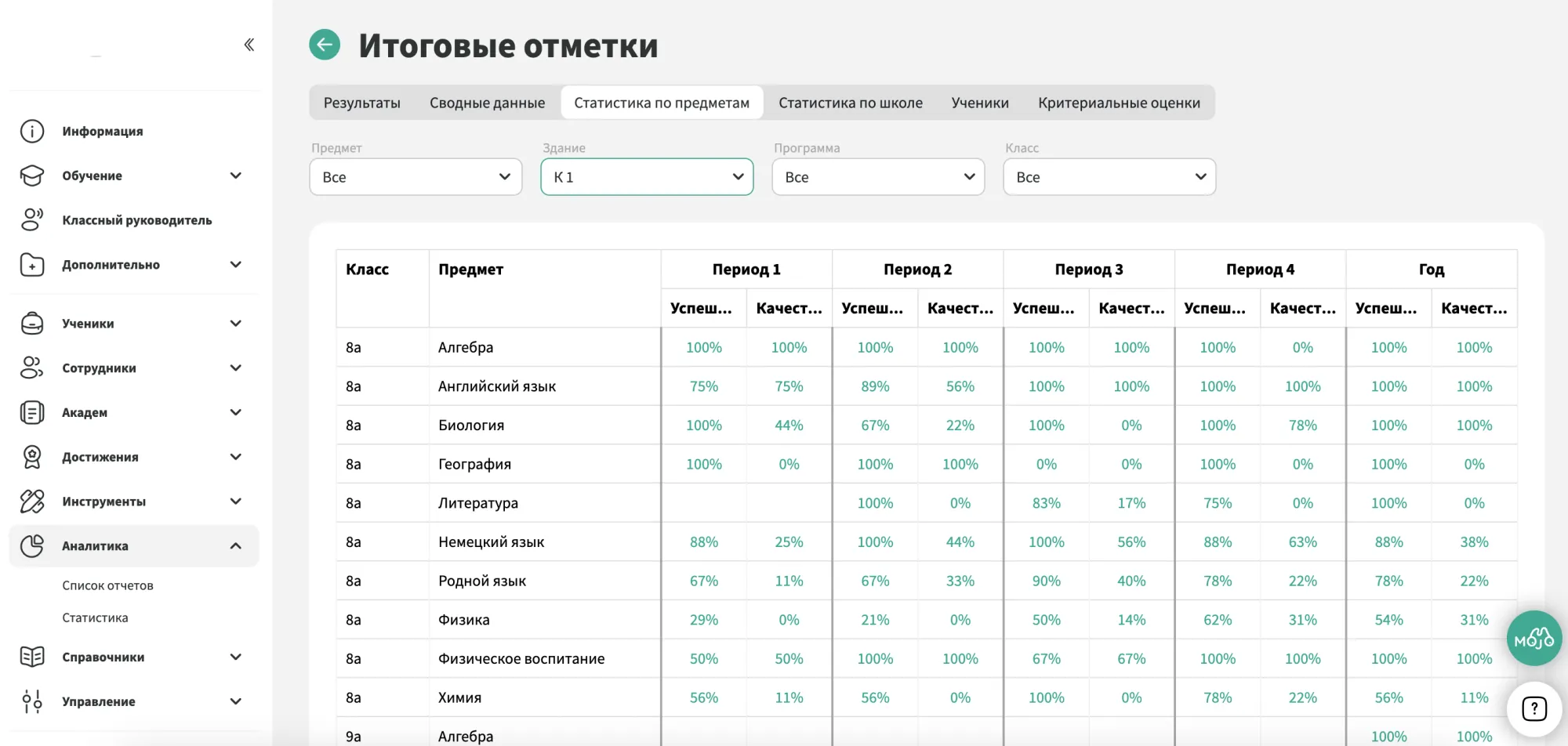
The benefits are different for every group. Students receive feedback that shows what they are already doing well, which skills they are developing and what to work on next. Parents gain a fuller picture of their child’s progress, effort and development. Teachers save time without losing the quality or individuality of their reports. School leaders gain structured information that can support better decisions about teaching and school development.
In this model, a school report stops being simply a grade, a comment or a document sent home at the end of the term. It becomes a tool for growth.
The future of school reporting is not about making reports longer or more complicated. It is about making them more useful, clearer and more human.