
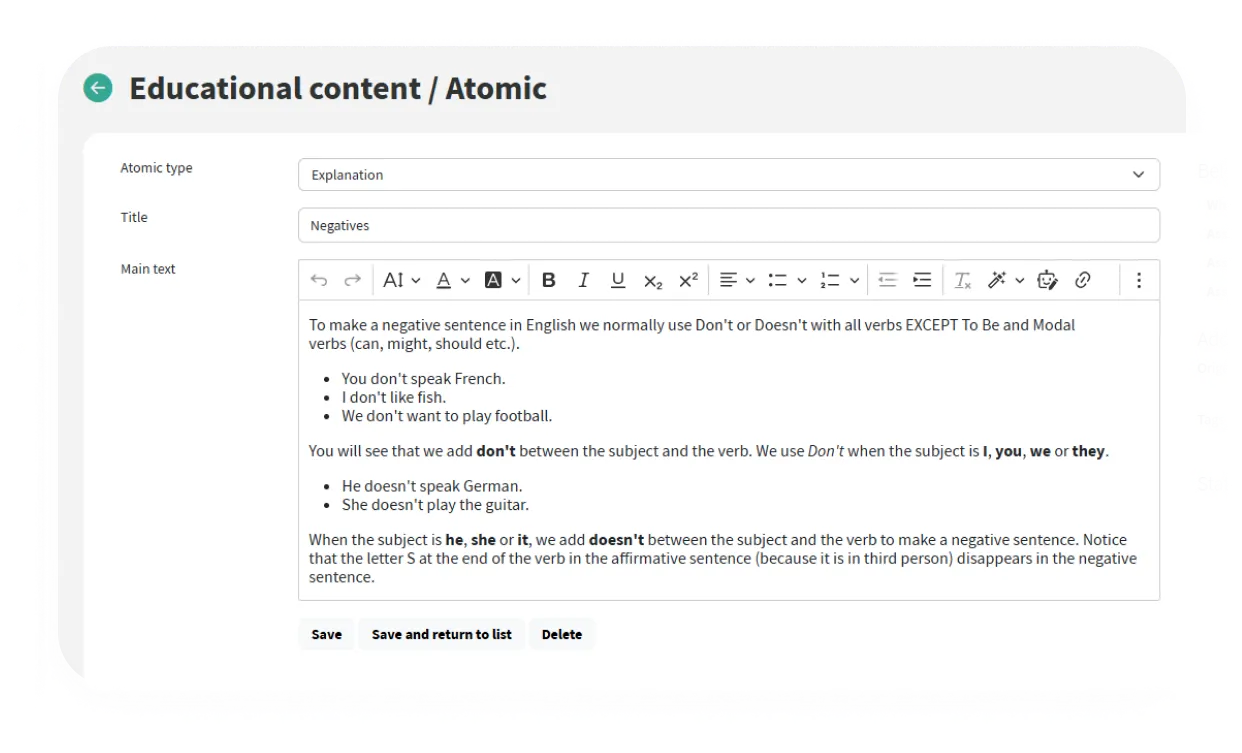
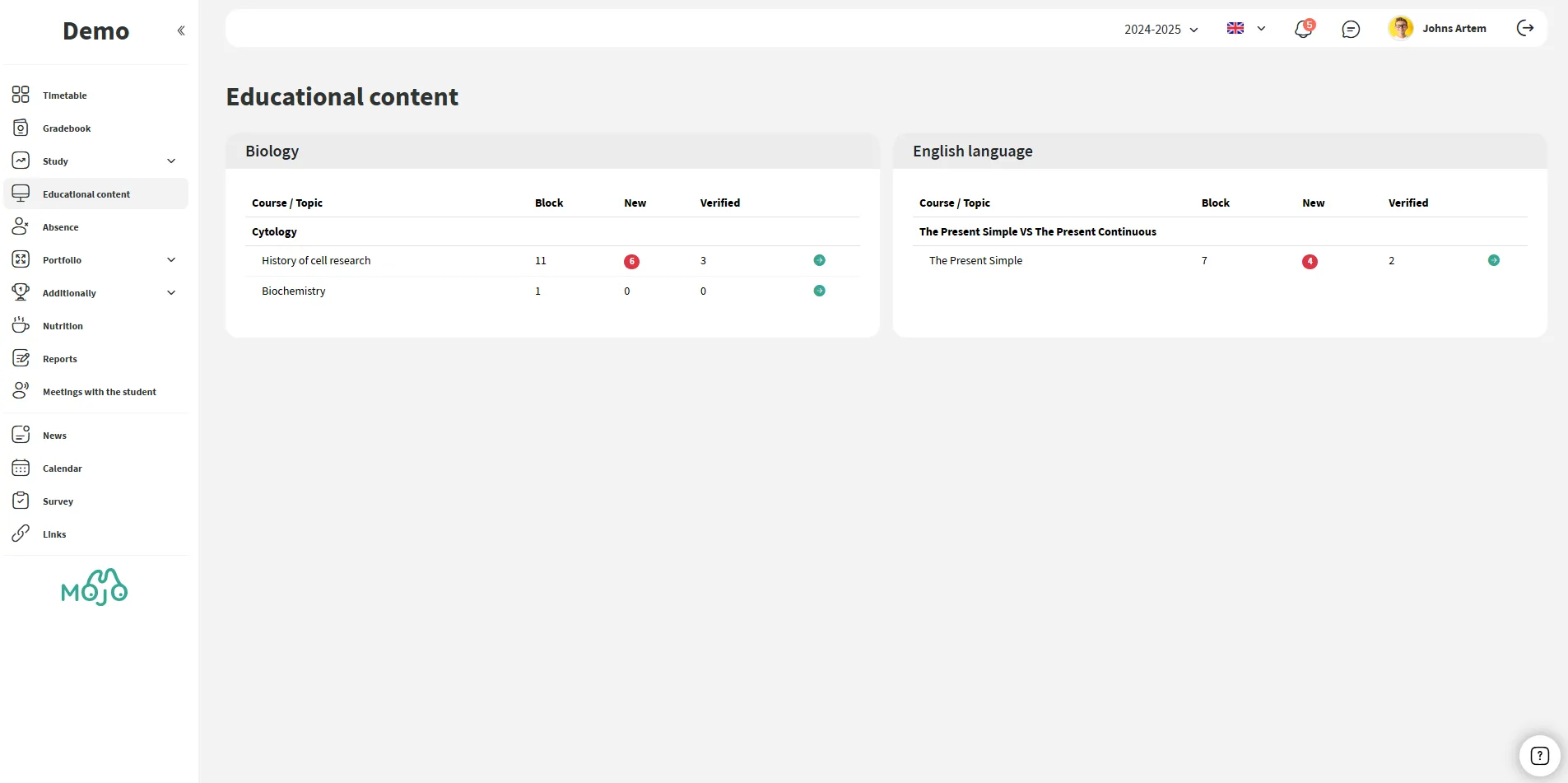
The teacher collects materials on a topic: presentations, videos, assignments, texts, and tests. Content can be supplemented, modified, and reused.
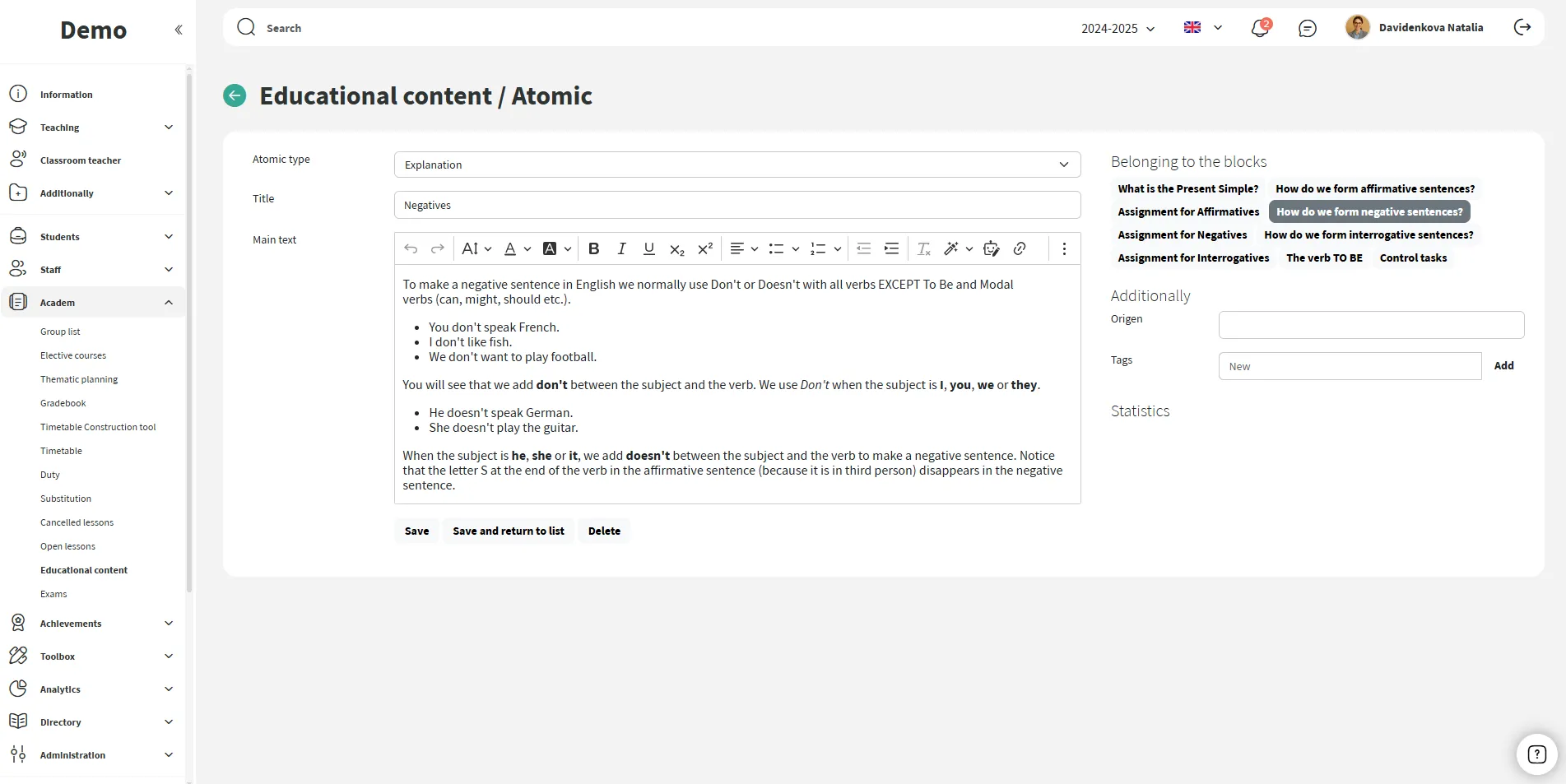
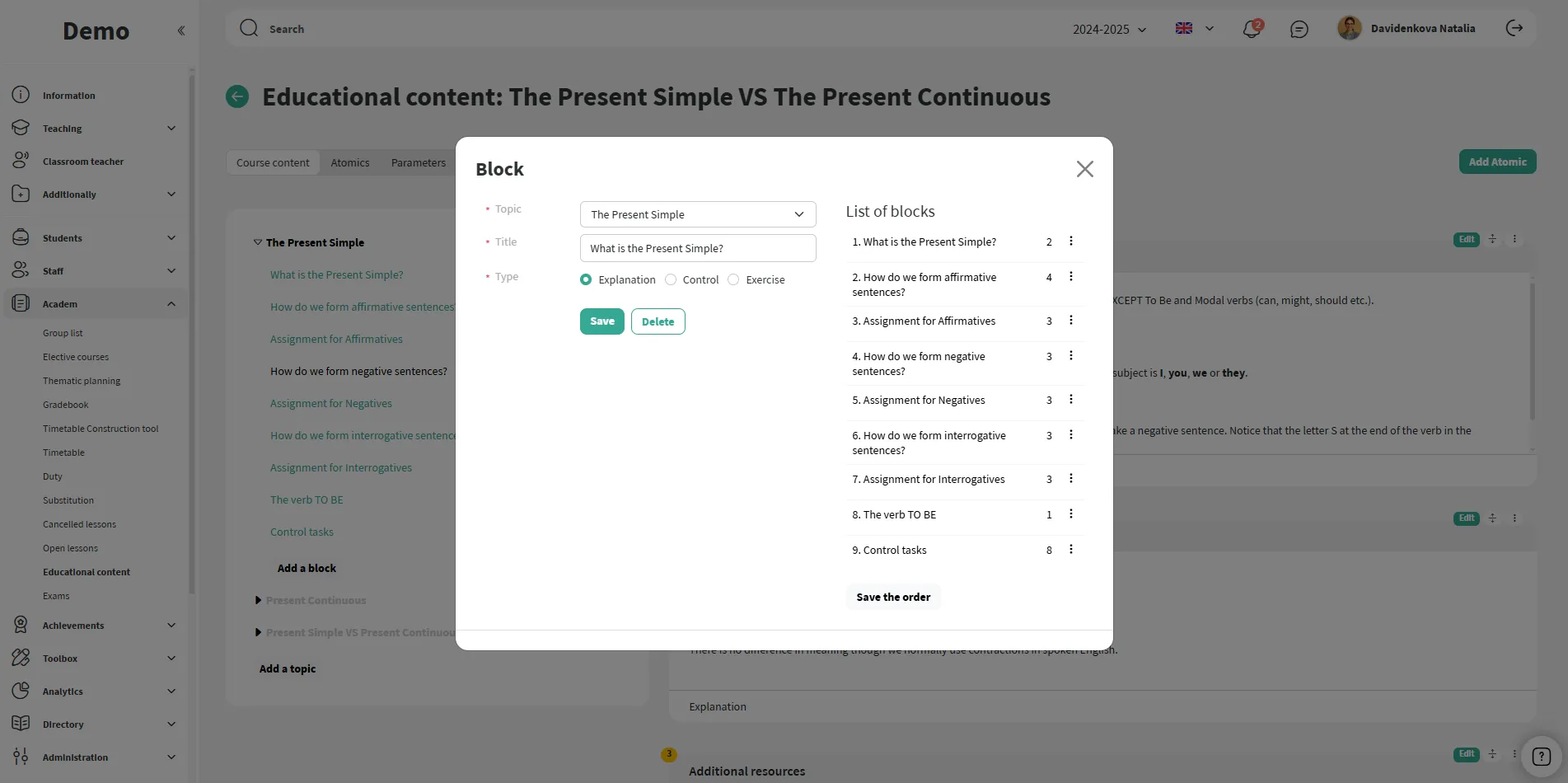
Each course can be divided into topics and blocks: theory, practice, and assessment. Inside are "atoms" (content units): explanations, tests, dictations, internet resources, and much more.
You can assign a course to a group or an individual student — for example, for in-depth study of a topic or to support students who are falling behind.
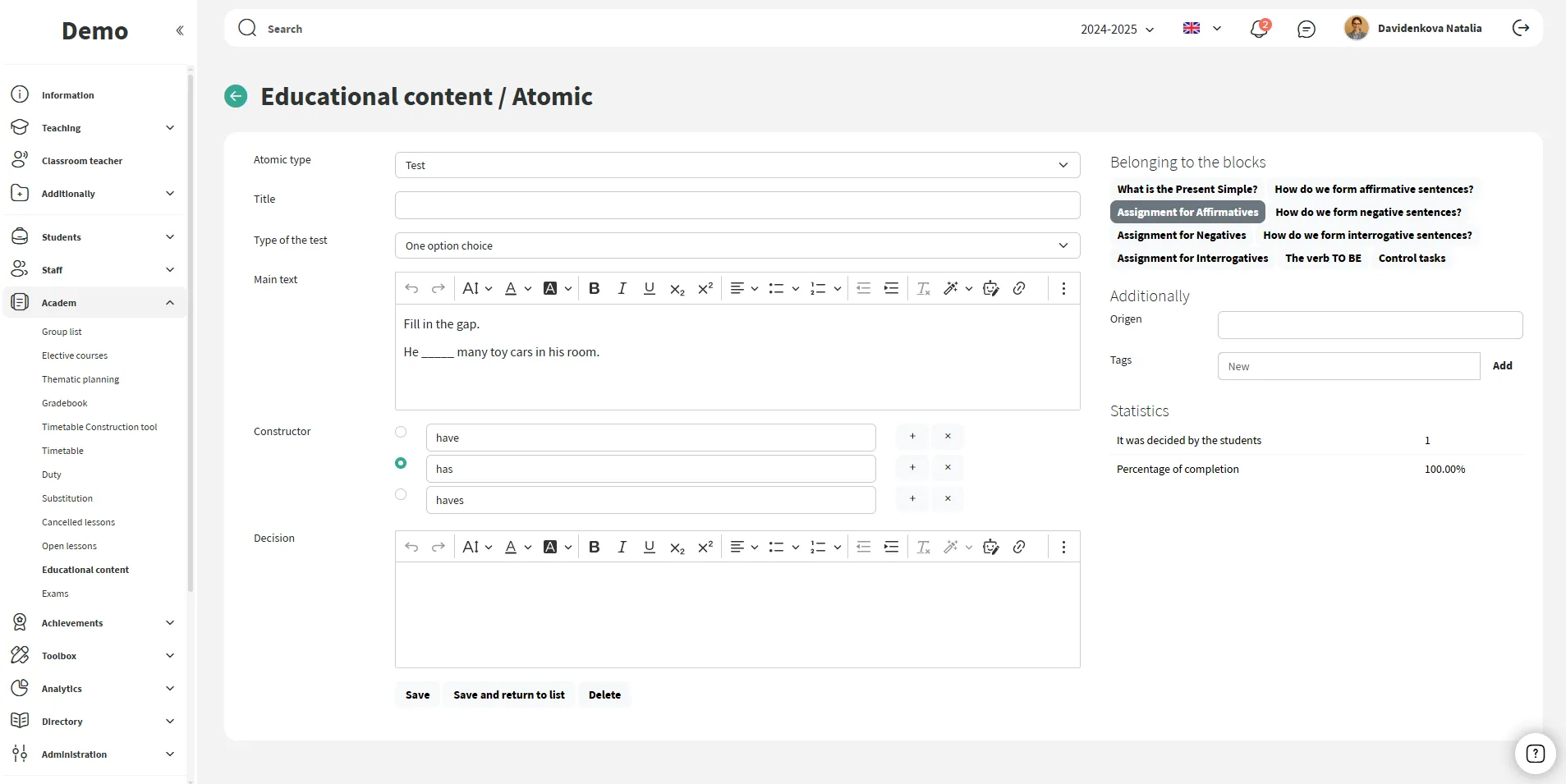
You can add various types of tests to a course: with single or multiple choice answers, value input, or ordering tasks. Tests are automatically graded, and the results are immediately available to both the student and the teacher.
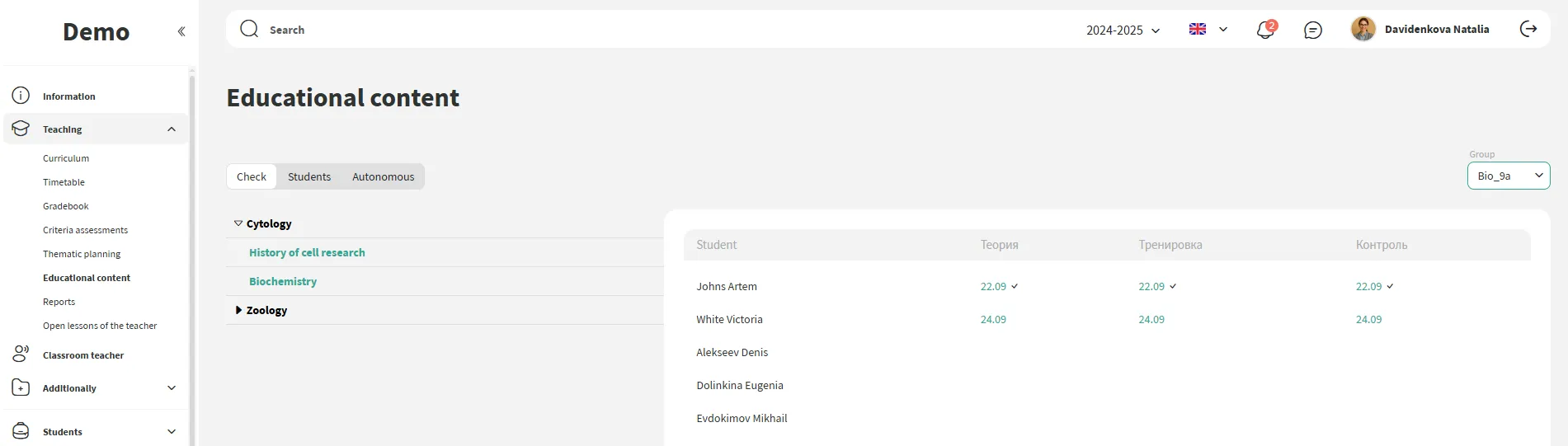
Each course has completion statistics: it shows who finished, where difficulties occurred, and who completed the assignments.


We have accepted the application and will contact you soon to set a time for the presentation.
